How to Protect Yourself during the Pandemic
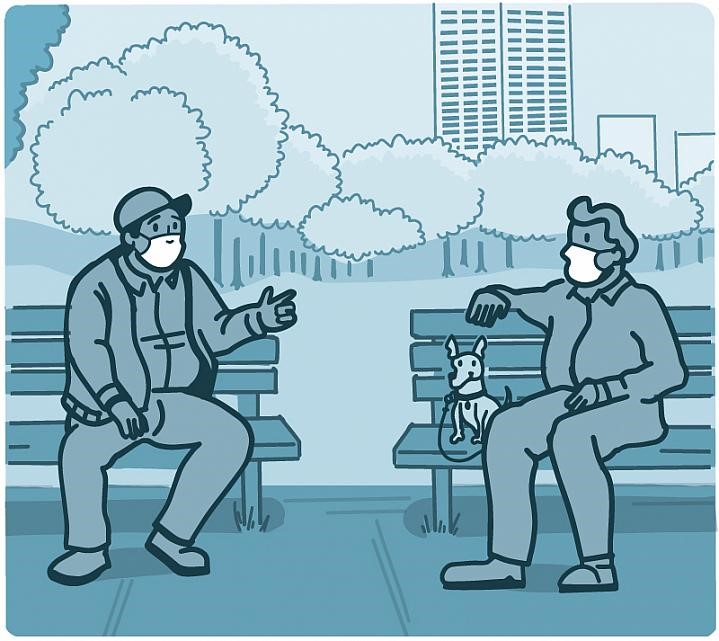
COVID-19 has claimed millions of lives around the world. But we learn more about this disease every day. Scientists are developing tools that promise to slow and eventually help us overcome the pandemic.
COVID-19 is caused by a new coronavirus called SARS-CoV-2. There are many types of coronaviruses. Some cause the common cold. Others have led to fatal disease outbreaks. These include severe acute respiratory syndrome (SARS) in 2003, Middle East respiratory syndrome (MERS) in 2012, and now COVID-19.
Coronaviruses are named for the crown-like spikes on their surface. (Corona means crown.) The viruses use the spikes to help get inside your body’s cells. Once inside, they replicate, or make copies of themselves.
Scientists have learned how to turn these spikes against the virus through vaccines and treatments. They’ve also learned what you can do to protect yourself from the virus.
Protecting Yourself
You’re most likely to get COVID-19 through close contact with someone who’s infected. Coughing, sneezing, talking, and breathing produce small droplets of liquid. These are called respiratory droplets. They travel through the air and can be inhaled by someone else.
“COVID-19 is spread mainly through exposure to respiratory droplets that tend to drop within six feet,” says Dr. Anthony Fauci, director of NIH’s National Institute of Allergy and Infectious Diseases. That’s why it’s important to stay at least six feet (about two arm lengths) away from people who don’t live with you.
“Surfaces can be contaminated. But it is likely that this is a less common cause of infection rather than person-to-person directly,” Fauci says.
You can protect yourself and others by wearing a mask. Choose one that has at least two layers of fabric. Make sure that the mask covers your mouth and nose and doesn’t leak air around the edges.
“There’s very little transmission in places where masks are worn,” says Dr. Ben Cowling at the University of Hong Kong who studies how viruses spread. Cowling found that infections were most often spread in settings where masks aren’t worn.
“Masks work. But even with mandatory masking, you still need social distancing as well,” he says. You can lower your risk by avoiding crowds. Crowds increase the risk of coming in contact with someone who has COVID-19. *BTNewspaper/dwi/who