SUVJF 2026: When Jazz Creates Space for a “Second Life”
UBUD, BTNp: CELEBRATING the 13th anniversary of the Ubud Village Jazz Festival—and its fourth year under the banner of the Sthala Ubud Village Jazz Festival (SUVJF)—the event goes beyond showcasing jazz music. It also fosters sustainability by giving a “second chance” to materials otherwise destined for the trash.
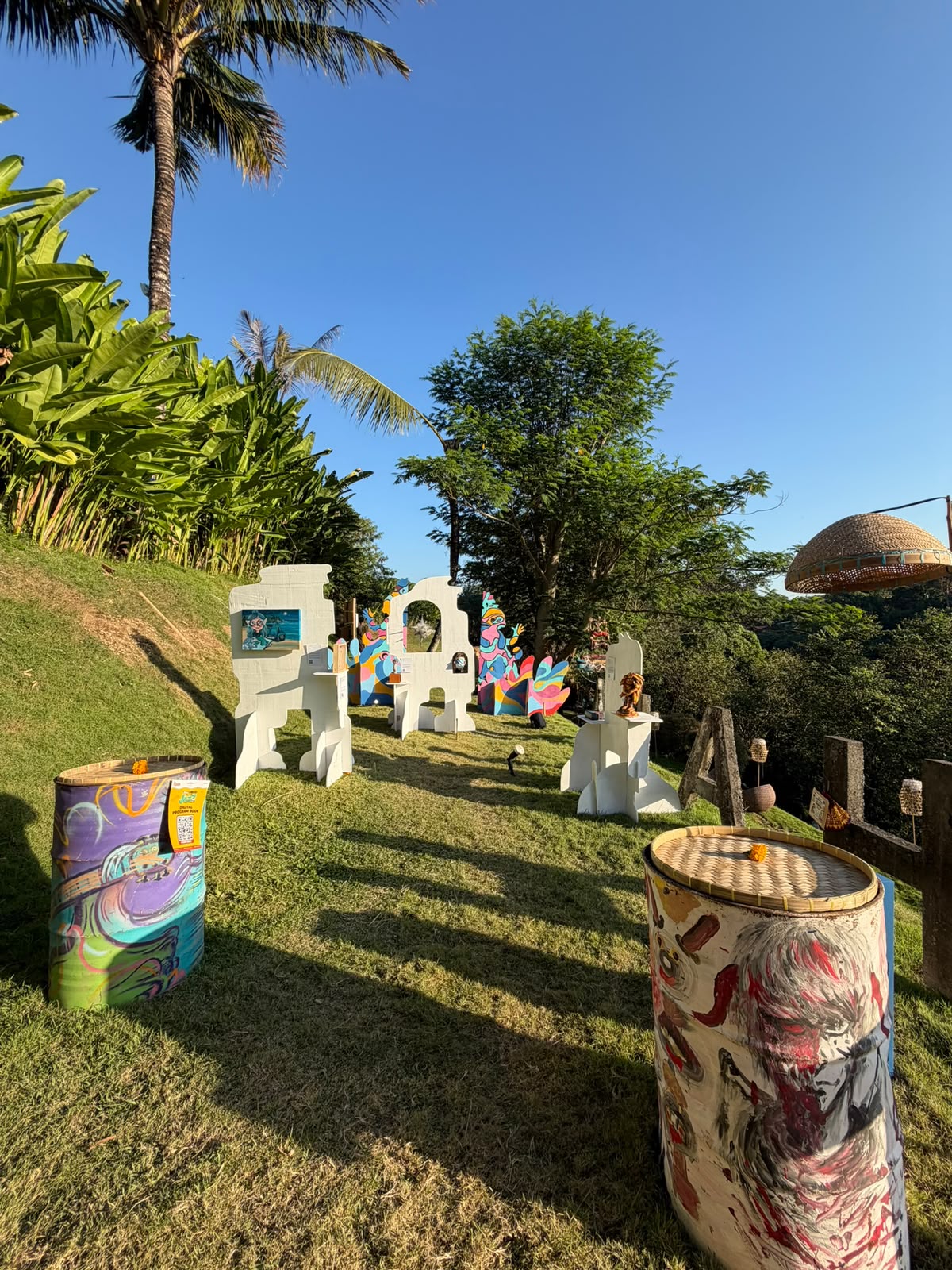
Having spent the last two years battling single-use plastics, SUVJF takes a significant step forward this year with a visual art exhibition titled “Second Life: An Exhibition of Found Materials & Upcycled Art”, curated by the art collective Kala Patha.
The exhibition features work by eight contemporary artists—Ayu Murniati, Defina Sumardji, Ediwe, I Komang Adiartha, Modjo, Nym Handi Ya, Skinner Ohrami, and Sofiya Shukhova—each transforming discarded objects, recycled materials, and industrial waste into new artistic forms.
Presented under Kala Patha’s curatorial concept, “Island of Hope,” the exhibition guides visitors through the environmental realities of Bali toward a more hopeful vision.
Visitors and jazz enthusiasts are greeted by propaganda-style posters highlighting urgent challenges facing Bali, such as over-tourism, environmental degradation, mounting waste, and the shrinking of green open spaces. Nearby stands an installation created in collaboration with artist Edy W, transforming used flip-flops into the figure of a woman carrying stones from a Balinese river—a reflection on labor, memory, and waste.
Yet, upon stepping inside, the atmosphere shifts completely. Vibrant colors, playful installations, and an immersive spatial experience create the sensation of entering an “Island of Hope,” a place where creativity offers alternative perspectives for envisioning the future.
Kala Patha also designed a modular gallery “pop-up” created specifically for this festival. Each display structure is tailored to the character of the individual artwork. A key highlight is the work of Modjo, who transforms leftover construction materials—including used paint cans and scraps of plywood—into sculptures inspired by his signature character, which features “Barong”-sequel elements.
For Defina Sumardji, co-founder of Kala Patha, this exhibition is not merely a showcase for art, but also an effort to shift perspectives.
“Discarded objects do not mark the end of a story—but rather the beginning of a new one. What many consider waste can be transformed into sculptures, paintings, or installations. It is simply a matter of viewing the material from a different perspective,” he remarked.
The spirit of sustainability extended beyond the exhibition itself; near the “Community Stage,” visitors could charge their devices at solar-powered stations—a collaboration with InfiSolar. This system also supplied a portion of the electricity needed for the festival booths.
Where the World Swings Together
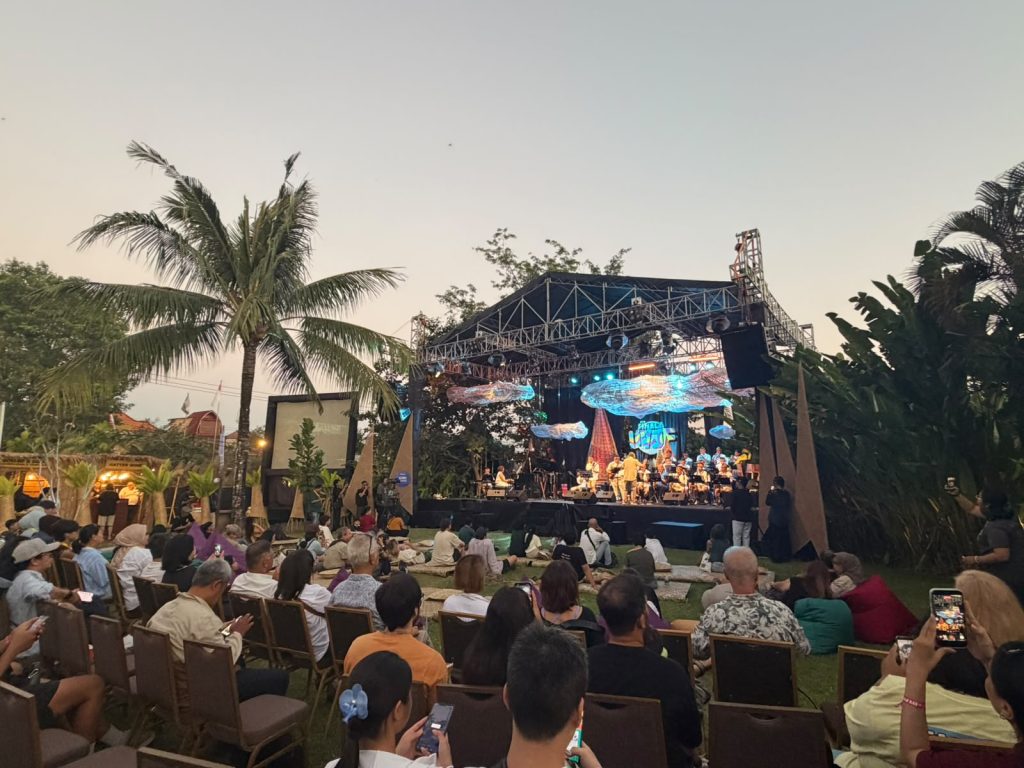
Last night, the opening ceremony of the Sthala Ubud Village Jazz Festival (SUVJF) 2026 took place at the Giri Stage at 6:05 PM, featuring an energetic performance by the Salamander Big Band—an independent jazz orchestra from Bandung—celebrating nearly two decades together with a lineup of around 27 musicians.
The festival, themed “Where the World Swings Together,” was held across three interconnected performance areas: The Giri Stage; the Subak Stage, situated by the river amidst banyan trees and natural rock formations; and the Community Stage, where the Westside Vinyl DeeJays spun jazz-infused vinyl records throughout the afternoon.
Audiences also enjoyed performances by the Rason Trio and the Imelda Rosalin Quintet, with the festival continuing with acts such as LaDju, the Simone Prattico Java Collective, the Dattie Do Duo, Straight & Stretch, and the Michael Ananda Trio across the Giri and Subak Stages.
Not About Commercial Success
Highlighting the philosophy—and the essence of jazz music—behind the festival, Heru Djatmiko of the SUVJF 2026 organizing committee stated that commercial success was never the festival’s primary goal.
“We didn’t build this festival to make a profit. We built it because we love jazz music,” he emphasized.
A similar sentiment was expressed by Lasta Arimbawa, General Manager of STHALA Ubud Bali, who was deeply impressed by the total transformation of the venue—a location he already knew well—for this year’s event.
“The first thing that impressed me was the creativity. The location is the same, yet the layout is different.That is truly worthy of appreciation,” he said.
Lasta also recalled a moment during last week’s press conference when a journalist asked one of the festival’s co-founders, Yuri Mahatma, about the target number of visitors for this year.
“I don’t care about the numbers. As long as people come and enjoy the music, that is enough for me. This festival wasn’t created to seek profit but rather out of a love for jazz music. These two statements encapsulate the very spirit of the festival. The Ubud Village Jazz Festival was built with heart,” Yuri added. *BTNewspaper