Lao PDR Drives Action towards Climate-resilient Health Systems
DUBAI, BTNp: LAOS is not only a signatory to the COP28 Declaration but is also actively participating in the Alliance for Transformative Action on Climate and Health (ATACH), an initiative established by WHO to assist countries in fulfilling their commitments made at COP26 on climate change and health.
Climate change poses a significant threat to Laos, with projections of extreme weather events, increasing temperatures, and rising rainfall, particularly in the south. These changes are expected to reach 2–3 degree Celsius temperature increases by 2050 and 10–30 percent higher rainfall, putting the country at heightened vulnerability, as reported by the World Health Organization (WHO).
The new COP28 declaration voices deep concerns about the adverse effects of climate change on health and calls for immediate actions to reduce greenhouse gas emissions, combat air pollution, and promote sustainable lifestyles globally
And the Lao Ministry of Health is playing a leading role at the 28th meeting of the UN Climate Change Conference (COP28) in the United Arab Emirates from 30 November to 12 December 2023, focusing on the effects of climate change on health, and mitigation and adaptation in the health system.
Vulnerable
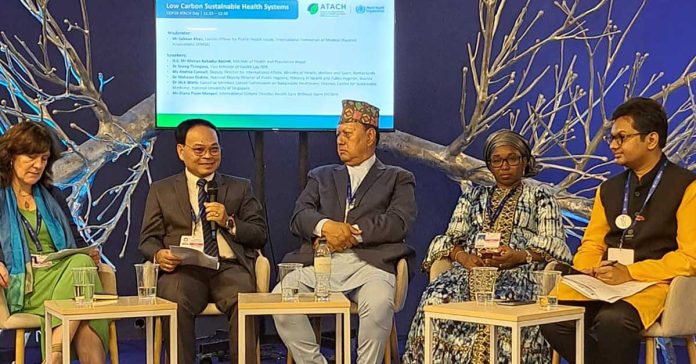
On that occasion, Lao Vice Minister of Health Dr Snong Thongsna co-chairs the ATACH working group on low-carbon, sustainable health systems, stressed that:
“Low-middle income countries are most impacted by climate change but have contributed the least to greenhouse gas emissions. We must take the opportunity to lead the climate response in collaboration with high-income countries.
Globally, the health sector contributes about 5% to global greenhouse gas emissions. So, we need ambitious action now to transform health facilities and programmes to a low-carbon, sustainable health systems.”
WHO Lao PDR Representative Dr Ying-Ru Lo acknowledged Lao PDR’s climate change action abroad and at home through its National Health Adaptation Plan.
The Ministry of Health, with WHO’s support, has been integrating climate and disease surveillance data to set up an early warning system that predicts climate-sensitive diseases and enable an early response. Other work includes a safe-clean-climate-resilient health-care facility initiative that has improved water and sanitation in more than 100 hospitals in areas that are vulnerable to flood or drought in the last three years.
“The Government of Lao PDR recognizes that the climate crisis is a health crisis. It is to be commended for its strong international role and for action it is already taking on climate change and health nationally. This work recognizes that the health sector will be important for achieving the country’s goal of achieving net-zero carbon emissions from the health sector,” Dr Lo said.
Lao PDR is particularly vulnerable to climate change, with projections of more extreme weather, a 2–3° C rise in temperature by 2050, and a 10–30% increase in rainfall, particularly in the south.
As a result, the country faces severe health challenges, including a rising risk of dengue fever, diarrhea diseases, heat stress and malnutrition, from extreme weather destroying crops and habitats, and poor water and sanitation infrastructure.
COP28 will, for the first time, includes a health day, a dedicated health and climate ministerial meeting, and a ministerial declaration on climate and health. WHO is working with the COP28 Presidency to make sure health is at the heart of the climate negotiations, and to accelerate actions that ensure healthy people and a healthy planet. *BTNewspaper/COP-28